Benefits of Coworking Spaces: A Smart Makkah Guide
The right workspace should support decisions, not add operational friction. A practical comparison helps Makkah founders and professionals choose a setting that fits the way they work.
Why the Benefits of Coworking Spaces Need a Closer Look
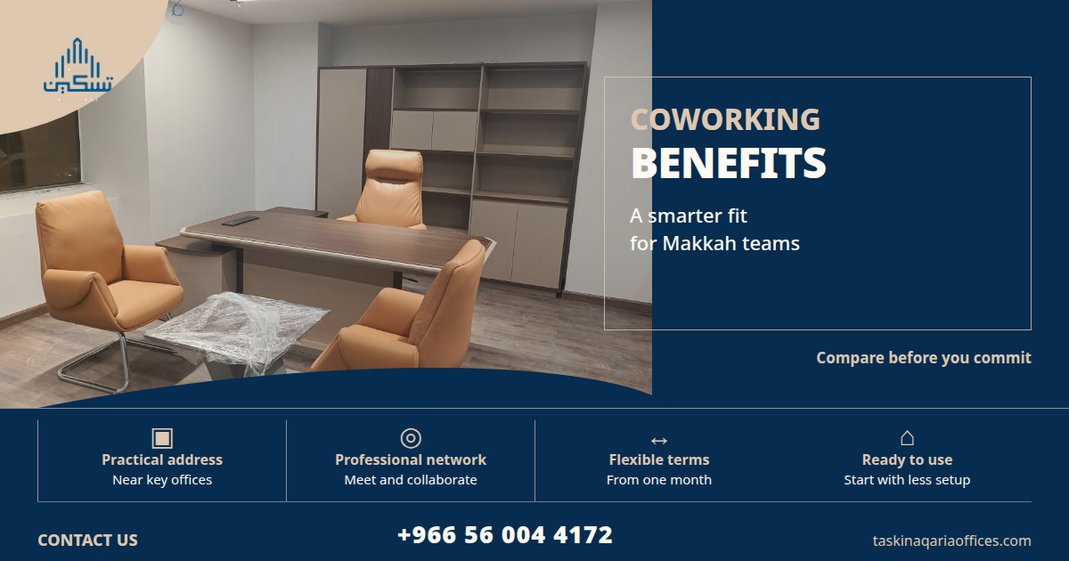
The benefits of coworking spaces become clearer when a workspace is treated as a business tool. A freelancer may need a credible address and a quiet desk. A growing team may need a ready environment that can change with its headcount.
That is why “Does the office look good?” is only a starting question. A stronger comparison asks whether the space supports daily work, client meetings, team routines, and future adjustments. First, review the contract. Then test the practical details that an attractive brochure may not show.
Coworking also reduces the number of decisions required before opening a professional base. Instead of sourcing every desk, meeting arrangement, and reception detail separately, a business can assess a prepared setting in one visit. That can be useful for startups, remote teams, and specialists serving clients across Makkah.
Comparison One: Flexibility Versus Long-Term Commitment
One of the most useful advantages of coworking spaces in Makkah is the ability to match the workspace to the current stage of the business. Some professionals need a place for a focused project. Others need a stable office while they build a larger team.
Start by defining the commitment you can responsibly make. If the business is still testing demand, a flexible contract starting from one month may make it easier to review the choice. If the team is established, ask whether a longer arrangement offers stability without removing the ability to adapt.
Flexibility should not mean vague operating rules. Ask how access works, how meeting rooms are booked, how visitors are received, and which services are included. Written terms make comparisons fairer and reduce surprises after move-in.
Questions worth asking before signing
Can the space change if the team grows? Is there a clear process for receiving clients? Does the business need a permanent address for meetings and correspondence? How often will the team use the office? These answers matter more than a generic promise of convenience.
Comparison Two: Plug-and-Play Readiness and Total Cost
A shared office in Makkah should be assessed through its total operating value, not rent alone. A conventional lease can require furniture, connectivity, meeting arrangements, reception planning, and ongoing coordination. A ready workspace may bring several of those elements together.
Make a short list of what the team needs on its first working day. Include desks, chairs, power access, meeting space, visitor handling, parking, and privacy. Then compare the complete effort of a private setup with what is genuinely included in the shared option.
This does not mean coworking is automatically right for every company. A business with sensitive files, specialised equipment, or a high need for exclusive control may require a different model. The smart decision comes from matching the space to the work, not from counting the largest number of amenities.
Inspect the workspace in person whenever possible. Check noise levels, lighting, call privacy, circulation, and the condition of the furniture. In fact, readiness is proven by ordinary working moments, not by polished images alone.
Comparison Three: Community Value Versus Focused Privacy
Shared environments can create useful professional proximity. A consultant may meet a complementary service provider. A founder may learn from another team’s experience. A remote worker may gain a more consistent routine outside the home.
However, interaction should not compromise concentration. If the business holds frequent meetings, ask about bookable rooms. If the work involves long periods of focus, choose a desk arrangement that limits unnecessary movement. This balance is one of the central benefits of coworking spaces when the layout is chosen carefully.
A professional building can also make client visits more predictable. The address is easier to explain, the meeting feels more organised, and the business does not need to host every conversation at home or in a café. For service providers, that change can improve the quality of the client experience without making claims about results.
Makkah adds another consideration. Businesses may serve government offices, visitors, pilgrims, and local commercial activity. Therefore, a workspace should be judged by access, clarity of location, and its ability to support real appointments, not by a broad label alone.
How to Compare a Coworking Space in Makkah
Location is a practical filter. Check the main roads, access for team members, visitor arrival, and parking arrangements. Free parking can remove a daily source of friction, but it should still be verified during a site visit and understood within the property’s operating rules.
Pride & Joy Business Tower is located in Al-Adl district in Makkah, on King Faisal branch road near Jabal Al-Nour. Its setting places businesses near government offices, while selected offices can offer views toward the Clock Tower and Ghar Hira.
A view should never replace an access test. Drive to the address during working hours. Ask how guests enter, where they park, and how they find the office. Then connect those answers to the business model. A solo professional may prioritise quiet. A client-facing team may prioritise a clear arrival experience.
This practical approach also fits the broader direction of Saudi Vision 2030, which supports a more diversified and active business environment. The useful step is to convert that broad context into criteria that can be checked at the property.
Who Should Consider Coworking?
A coworking space in Makkah can suit a freelancer who wants a professional base without managing a full office. It can also suit a startup that is validating its model and wants to preserve room for change.
It may work for a distributed team that needs a reliable meeting point. It can suit consultants, designers, professional service providers, and representatives who meet clients in a structured setting. Conversely, a business with strict confidentiality or specialised storage may need a more private solution.
Estimate the team’s real usage before choosing. A desk for focused work, a table for collaboration, a room for calls, and a suitable arrival area each serve a different purpose. When every part of the workspace has a clear job, the comparison becomes easier.
Signs that the choice is practical
The route is easy to explain. The contract is clear. Visitors know where to go. The team can start the day without a long setup process. Moreover, the workspace does not force the business to pay for facilities or commitments it will rarely use.
How Taskin Aqaria Helps You Compare Options
Taskin Aqaria develops, manages, and operates real estate projects, with services covering property, facility, and asset management as well as leasing. That perspective supports a needs-based conversation instead of a generic office pitch.
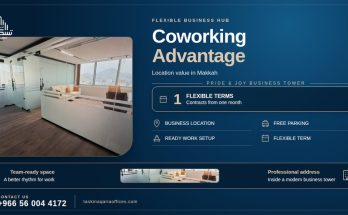
At Pride & Joy Business Tower, founders and small teams can review varied office sizes, flexible contracts starting from one month, free parking, and an administrative address in Al-Adl. Actual suitability still depends on availability and the requirements of each business.
Prepare the facts before a visit. Note the number of users, the type of meetings, the expected term, and the privacy level required. Then discuss those points with Taskin Aqaria so the available options can be assessed against actual use.
For more practical guidance, visit the Taskin Aqaria Blog. A good decision is not necessarily the largest office or the longest contract. It is the arrangement that the team can use consistently and explain clearly.
Conclusion: Make the Decision With a Shortlist
The benefits of coworking spaces include flexibility, operational readiness, community access, and a professional address. They still need to be tested against the business. Review the location, read the terms, inspect the workspace, and compare privacy with the team’s daily habits.
In Makkah, the right base can help a business host clients, organise its routine, and adjust its footprint without unnecessary setup decisions. Therefore, take a tour, ask direct questions, and request accurate information before making a commitment.
To explore a workspace option that fits your business, contact Taskin Aqaria through the official website today.