Coworking vs Private Office: A Growth Decision
The right workplace format should support how a business operates now while leaving room for an orderly next step. For owners and investors, that distinction also shapes how an asset is positioned, managed, and understood.
A workplace decision becomes clearer when it starts with the working day rather than a label. The question of coworking vs private office is really about access, confidentiality, client experience, and the practical rhythm of a team. A well-presented property should help prospects assess those factors without relying on broad claims.
For investors and property owners, the choice reveals more than tenant preference. It indicates which services matter, how common areas will be used, and how a business address contributes to a tenant’s professional presence. Therefore, a strong office proposition makes the trade-offs easy to see before an agreement is made.
Makkah adds its own operational context. Accessibility, parking, nearby services, and a location that works for client meetings can matter as much as an attractive interior. As a result, the most useful comparison connects the workspace type to the building’s actual service model.
Coworking vs Private Office Is a Portfolio Question
Investors can view coworking vs private office as two complementary ways to meet different forms of demand. Shared settings can serve professionals who value flexibility and ready-to-use facilities. Private offices can support organisations that need a dedicated base for regular meetings, documents, equipment, or a consistent client-facing identity.
The objective is not to declare one format superior. Instead, it is to align a space with the use case it can serve reliably. This approach supports clearer marketing, more meaningful site visits, and a better conversation about what the tenant actually needs.
Start With Attendance Patterns
A freelancer who comes in for focused work several days a week may value an organised desk environment and easy access. A distributed team may need a professional meeting point more than a permanent suite. By contrast, a team working in person every day is more likely to benefit from a fixed room and a predictable layout.
These patterns also change over time. A new venture may begin with flexible use, then require a private office as client appointments and internal coordination grow. That is why a property should explain its options as a practical pathway, rather than as an all-or-nothing choice.
Then Assess Privacy and Client Contact
Private offices are often useful when confidentiality, uninterrupted calls, or formal client meetings are central to the work. They give a team a controlled setting that can be arranged around daily routines. However, they are most valuable when that dedicated setting is used consistently.
Coworking can be the better fit when a professional simply needs a ready environment for concentrated work, occasional collaboration, and a credible business address. The decision should follow the sensitivity of the work and the expected visitor experience, not a generic idea of prestige.
Where Coworking Creates Practical Value
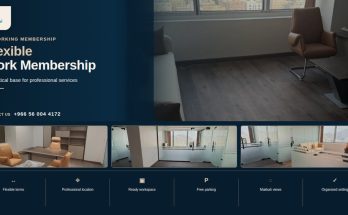
A shared office space Mecca can reduce the preparation required before a professional begins working from a formal setting. The user can focus on their schedule while the building provides the shared environment. Moreover, a flexible option allows a business to review its actual usage before committing to a more independent workspace.
When evaluating a coworking space Makkah, it is sensible to examine the journey around the desk as well as the desk itself. Consider how visitors enter, where meetings can take place, whether access feels straightforward, and how the workspace fits the team’s calendar. Those details determine whether the space supports work on a repeatable basis.
A coworking space for freelancers can also provide a useful separation between personal and professional routines. It offers a place to plan client work, make calls, and build a more disciplined day. Still, freelancers should check whether the environment matches their need for quiet, meetings, and flexible attendance.
What a Private Office Can Protect
A private office gives a team a defined operating base. It can make it easier to retain working materials, protect sensitive discussions, and welcome clients in a setting that reflects the company’s own style. In addition, it lets a business establish regular habits around arrival, meetings, and internal collaboration.
That benefit should be measured against the real frequency of use. A private office may not be the most efficient choice for a team that rarely works together in person. Conversely, a growing team may quickly find that a shared workspace no longer provides enough privacy or continuity. The answer depends on the work, not on a fixed rule.
This is where coworking vs private office becomes a useful management question. Owners who present both paths clearly can help a prospect select the right stage of occupancy. That clarity strengthens trust because the discussion stays grounded in the tenant’s operating requirements.
The Pride & Joy Business Tower Operating Context
Pride & Joy Business Tower provides office options in varied sizes within Al-Adl district in Makkah, on King Faisal branch road near Jabal Al-Nour. The location can be relevant to teams that value straightforward access and proximity to government offices. It also gives an investor a practical setting in which to explain the relationship between workspace choice and daily operations.
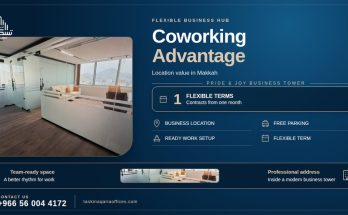
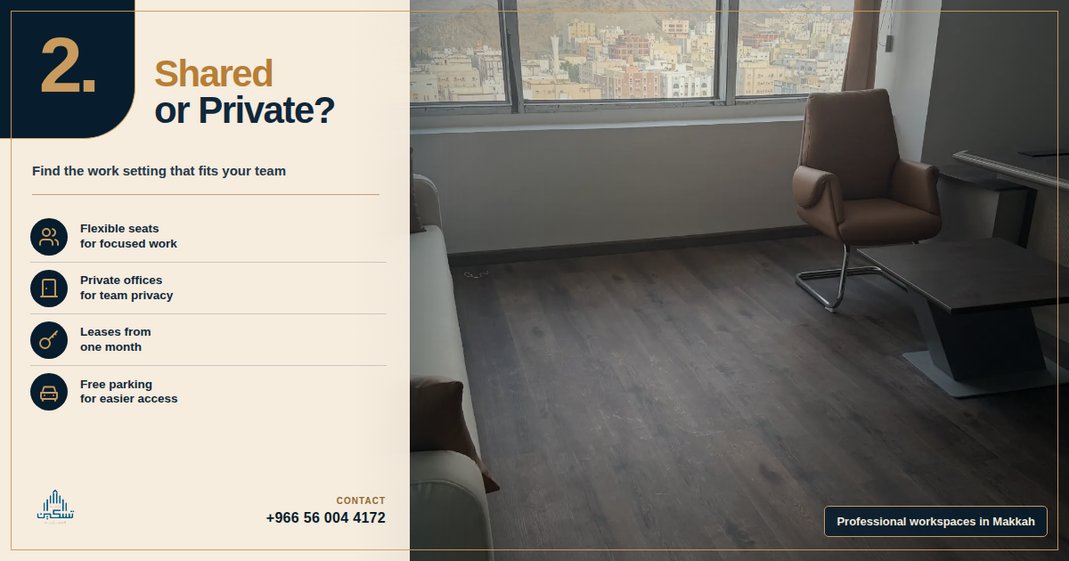
Lease contracts start from one month, which can support businesses that need to align their commitment with their current stage. Free parking is available, and units may have views of the Clock Tower and Ghar Hira depending on their position. These are concrete factors to discuss during a viewing, alongside the team’s preferred balance of shared access and private focus.
Taskin Aqaria develops, manages, and operates real estate projects with services spanning property, facility, and asset management as well as leasing. That operational perspective matters because the experience of a workplace depends on how common services are organised, not only on the unit’s initial presentation.
Services Turn Space Into a Workable Offer
For a tenant, reliable access and well-managed facilities are part of the working day. For an owner, they are part of the asset’s long-term proposition. Visitor arrival, parking, maintenance communication, lift access, and the condition of shared areas all influence how a business feels about the location after the first visit.
Therefore, prospective tenants should ask focused questions about the services they expect to use. They can clarify meeting arrangements, visitor procedures, access routines, and the practical rules for shared amenities. The answers make it easier to compare a flexible seat with a dedicated office on a like-for-like basis.
Managers also benefit from this discipline. Feedback about ease of access, privacy, and common-area use can guide refinements in service delivery. Over time, an asset becomes more useful when its service promise is specific, transparent, and matched to the people who use it.
How Investors Should Frame Price Conversations
Searches for coworking membership prices Makkah are understandable, but a headline figure does not explain the full value of a workplace. The relevant question is what is included, how frequently the space will be used, and whether the operating model suits the business. Current details should always be confirmed directly with the provider.
Instead of making assumptions, compare the agreement scope, the intended use of meeting areas, parking needs, visitor patterns, and the possibility of moving to a different configuration later. This keeps the analysis practical. It also prevents a decision from being based on incomplete or outdated information.
For owners, transparent conversations create a more durable relationship with prospects. A business that understands the service scope is better placed to choose responsibly. Consequently, the property’s message becomes more credible than a message that relies on vague comparisons or unsupported promises.
Connecting Workspace Choice to Asset Quality
A diversified office offering can help an asset address professionals at different stages. Flexible spaces may support independent specialists, small teams, and visiting professionals. Private offices may suit businesses with established routines, larger collaboration needs, or more frequent client engagement.
However, diversity only works when each option has a clear purpose. The investor should be able to explain who the workspace suits, what services support it, and what the next step could be if a tenant’s requirements change. In fact, this is a stronger approach than treating every prospect as if they need the same format.
This emphasis on useful, well-managed business environments sits naturally alongside the economic development ambitions outlined by Saudi Vision 2030. Yet successful implementation remains local and practical: a well-located building, understandable terms, responsive operations, and a workplace format that fits real activity.
A Simple Decision Framework Before Booking
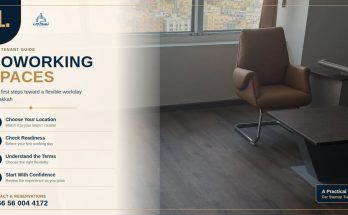
Before choosing between formats, list the expected number of in-person workdays, the types of meetings the team hosts, and the level of privacy required. Then review the location, route, building access, and parking from the visitor’s perspective. This short exercise often reveals whether flexibility or dedicated control is more valuable today.
Next, consider how the decision may change as work develops. A team can begin with shared use, monitor its needs, and move into a private setting when it becomes appropriate. For more practical workplace perspectives, visit the Taskin Aqaria Blog.
A Workplace Choice That Supports the Next Move
Coworking supports flexible, ready-to-use work. A private office supports continuity, focus, and a more controlled environment. Neither format is automatically right for every business. The best choice is the one that reflects the team’s current work pattern while keeping its next operational step visible.
Reserve your seat now in the coworking spaces at Pride & Joy Business Tower in Makkah — contact Taskin Aqaria through the official website.