Coworking Vs Private Office: An Investor Choice In Makkah
Commercial property decisions in Makkah increasingly depend on adaptability. Investors and property owners can create stronger products by matching workspace formats with real business needs.
Why Workspace Format Matters In Makkah
Commercial activity in Makkah includes established companies, professional practices, new ventures, and temporary project teams. Each group evaluates an office differently. Therefore, the question of coworking vs private office is also a question about asset design and operating strategy.
A private office usually offers control, separation, and a stable setting for a company. Coworking provides a more adaptable way to access professional space. A tenant searching for shared office space Mecca should still assess access, privacy, and service scope. However, neither format creates value automatically. Location, service quality, contract terms, and building management shape the tenant experience.
Makkah adds several commercial considerations. A professional address can support meetings with clients and government-related stakeholders. Proximity to government offices can reduce travel friction. Access to major roads can also support teams that serve customers across the city.
The wider Saudi business environment is moving toward more diversified activity. The goals described in Saudi Vision 2030 support a productive economy and a more capable business ecosystem. That direction does not make every workspace model suitable. Instead, it increases the value of flexible property products with clear operating standards.
Coworking Vs Private Office For Property Owners
For an owner, coworking is an operating model rather than a simple room type. It may include shared reception, meeting facilities, service areas, and different access options. The owner must coordinate these elements. As a result, management capability becomes part of the property’s commercial proposition.
A private office can simplify the tenant relationship. The company receives a defined unit and usually makes more decisions about its internal arrangement. This format can suit businesses that handle confidential information, receive clients frequently, or want a consistent branded environment.
Yet a private-office strategy may leave less room for gradual growth. A small company can outgrow its unit, while a project team may not need a long commitment. Coworking can respond to these situations more directly. Additionally, a mixed portfolio can serve different tenant profiles within the same building.
The right comparison should include more than occupancy. Owners should review unit divisibility, maintenance access, visitor flow, shared-facility capacity, and the clarity of house rules. They should also consider whether the building can support both focused work and professional interaction.
Flexibility Requires Structure
Flexible space is valuable when the user understands what is included. Booking rules, access hours, meeting-room use, visitor procedures, and privacy expectations should be explained before signing. This discipline protects the shared environment and reduces avoidable disputes.
For investors, that lesson is important. A flexible contract can widen demand, but it must be supported by reliable operations. Otherwise, short commitments may create administrative pressure instead of a durable commercial advantage.
Coworking Vs Private Office Through The Tenant Journey
A tenant often begins with a practical question: how quickly can the team start working? Coworking may shorten the preparation period because the environment is already organized. That advantage matters to freelancers, early-stage companies, and remote teams establishing a local presence.
The value of a coworking space for freelancers is not limited to a desk. It can provide a professional setting for client calls, a place to hold meetings, and a clear separation between home and work. These benefits of coworking spaces depend on thoughtful design and reliable management. The user still needs to confirm privacy, access, and service details.
A private office follows a different journey. The tenant usually invests more time in selecting furniture, arranging technology, and defining the internal layout. That effort can produce a stronger sense of ownership. However, it can also increase the time and attention required before operations begin.
Teams should therefore identify their working pattern. A consulting practice may value a private reception area. A small digital team may prefer a flexible shared setting. A company with changing project groups may need the ability to add or reduce workspace without moving its entire operation.
Professional identity also deserves attention. A shared environment can still support a credible business address when it is well maintained. In contrast, a private suite may communicate permanence, but only when the building and services reinforce that impression.
Location, Parking, And Daily Usability
Workspace decisions are experienced every day. Tenants notice the route to the building, the clarity of the entrance, the availability of parking, and the quality of reception. These details can influence client confidence more than a promotional phrase.
In Makkah, an office near relevant government services can be practical for professional firms. A location in Al-Adl district, near Jabal Al-Nour and the King Faisal branch road, can provide a recognizable setting for business users. Owners should present these facts accurately and invite prospects to verify the route.
Free parking can support both staff and visitors. It does not replace good access management, but it reduces one common source of friction. Views toward the Clock Tower and Ghar Hira can also contribute to the character of a workspace, especially when the office is used for meetings.
These features matter in both formats. Coworking users may visit at different times, while private-office tenants may have more consistent routines. In either case, a building should make the ordinary workday straightforward.
How To Compare Costs Without False Precision
There is no responsible universal price for a workspace in Makkah. Cost changes with office size, furnishing, services, contract duration, access rights, and the unit’s position. Therefore, investors should avoid general figures that do not reflect a specific offer.
A useful comparison starts with the total operating burden. For a private office, review furnishing, technology, utilities, maintenance responsibilities, and the time required before opening. For coworking, review the membership scope, meeting-room rules, support services, and the process for changing the workspace.
Anyone researching coworking membership prices Makkah should request a current written proposal. The proposal should explain what the fee covers and what creates an additional charge. This approach protects both parties and makes different buildings easier to compare.
Cost efficiency also depends on utilization. A private suite used by a small team may leave part of the area idle. A shared setting can improve flexibility, but the tenant may accept less control. The decision should reflect actual work patterns rather than a fashionable label.
For property owners, transparent packaging can reduce confusion. Clear service descriptions, readable contracts, and honest availability statements support trust. Moreover, they create a better foundation for repeat referrals and longer tenant relationships.
What Commercial Real Estate Trends Suggest
Recent commercial property discussions increasingly emphasize adaptability, operating quality, and tenant experience. Investors are not only asking how much space a building contains. They are also asking whether the building can respond to different business stages.
This shift is relevant to Makkah and the wider Saudi market. Companies may test a new branch, manage a seasonal workload, or build a local team gradually. A building with varied office sizes and flexible arrangements can address these needs without claiming that every tenant wants the same solution.
The strongest trend is not the replacement of private offices. It is the coexistence of private and shared formats. Some teams need concentration, while others need collaboration. A well-managed property can offer both, provided its circulation, acoustics, privacy, and service model are designed carefully.
Investors should also consider the asset’s long-term adaptability. Can units be combined? Can shared facilities serve more than one tenant type? Can management respond when demand changes? These questions support a more durable assessment than short-term marketing claims.
Taskin Aqaria And Pride & Joy Business Tower
Taskin Aqaria develops, manages, and operates real estate projects in Saudi Arabia. Its activities include property management, facility management, asset management, and leasing. This operating perspective matters when workspace users need more than four walls.
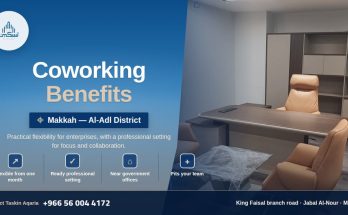
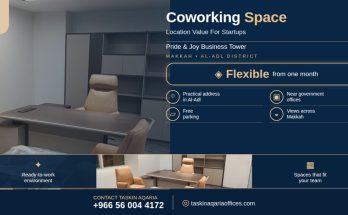
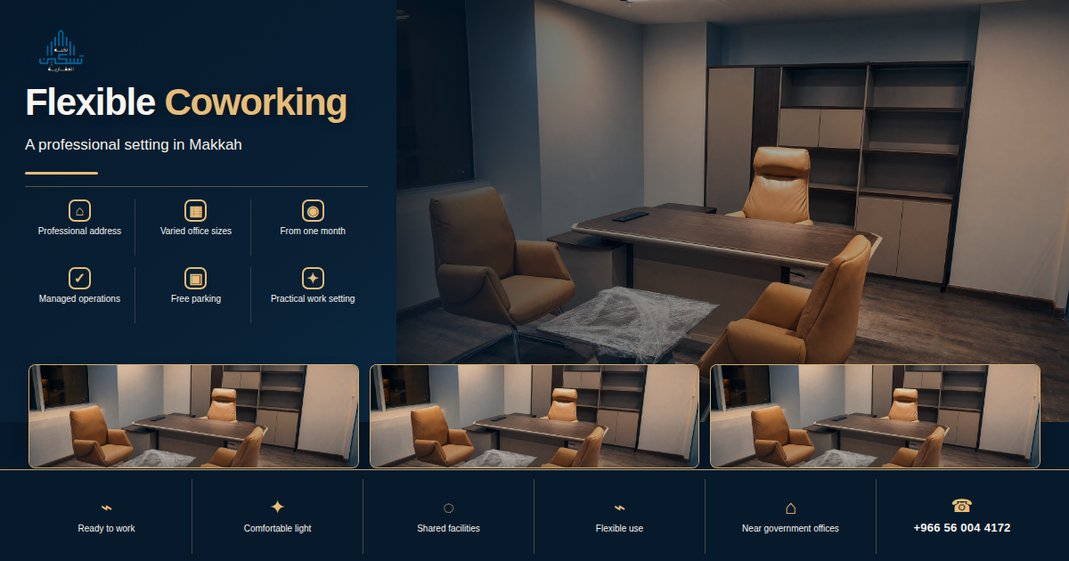
Pride & Joy Business Tower is a modern administrative tower in Makkah’s Al-Adl district. It offers offices in different sizes, flexible lease contracts starting from one month, free parking, and views toward the Clock Tower and Ghar Hira. The location is close to government offices and sits near Jabal Al-Nour on the King Faisal branch road.
For tenants, this combination supports a practical evaluation. They can compare office size, contract flexibility, access, parking, and the type of daily environment they require. For property owners and investors, the project shows how a building can serve more than one commercial profile without losing its administrative identity.
The role of Taskin Aqaria is to connect the physical asset with consistent management. That includes attention to facilities, tenant communication, and leasing clarity. Meanwhile, Pride & Joy Business Tower provides a concrete Makkah setting for comparing shared workspace with a private office.
Readers can use the Taskin Aqaria Blog to explore practical property topics before arranging a discussion. A site visit and a direct conversation remain essential for confirming current units and terms.
Conclusion: Match The Space To The Business
The answer to coworking vs private office depends on the operating reality of the tenant. Coworking can suit teams that value speed, flexibility, shared services, and gradual growth. A private office can suit businesses that prioritize control, confidentiality, and a stable internal setting.
Investors and property owners should avoid treating the formats as rivals. A balanced commercial project can provide both options, supported by clear rules and attentive management. In Makkah, the most credible proposition combines location, usability, contract clarity, and an honest explanation of what the tenant receives.
Reserve your seat now in the coworking spaces at Pride & Joy Business Tower in Makkah — contact Taskin Aqaria through the official website.