Benefits of Coworking Spaces: An Enterprise Tenant Guide
A practical, step-by-step framework for established companies that need a flexible workplace without losing operational discipline, client confidence, or team focus.
For an established company, workplace choice is an operating decision rather than a décor decision. The benefits of coworking spaces become relevant when a business needs a ready setting for a project team, a new market presence, or scheduled client meetings. In each case, the goal is not simply to occupy a desk. It is to create a dependable work routine with clear access, suitable support, and a professional setting.
That is why a structured assessment matters before signing any agreement. Taskin Aqaria supports businesses looking at administrative work options in Makkah, where location and day-to-day usability can shape the experience of employees and visitors. This guide sets out a measured process for enterprise tenants. It starts with work needs and ends with a review of real operational outcomes.
Step One: Define the Business Case
Start by naming the operational reason for using a shared workspace. A company may need a temporary project base, a location for a rotating field team, or a professional meeting point close to key stakeholders. Each reason produces a different brief. For example, a client-facing team may place reception and meeting access first, while a focused delivery team may prioritise quiet individual work.
Next, record the activities that must happen without friction. Consider concentrated work, internal reviews, video calls, private discussions, visitor meetings, and secure document handling. This exercise prevents a common mistake: choosing a workspace before agreeing what it must support. It also gives the decision group a shared checklist for every site visit.
Benefits of Coworking Spaces for Enterprise Operations
One major advantage is adaptability. A shared setting can let an organisation begin with the capacity it needs now and adjust when the project changes. This can be useful when a department is testing a regional presence or when a team has a defined assignment. Moreover, a ready workplace can reduce the practical tasks that surround setting up a separate office from scratch.
Another benefit is the professional rhythm created by a managed work environment. Clear arrival procedures, maintained common areas, and planned meeting facilities help teams stay focused on their own responsibilities. A well-considered professional work environment Makkah can also make visits easier for clients, suppliers, and colleagues who do not use the location every day.
However, flexibility should not be confused with informality. Enterprise tenants should still check how visitors are received, how meeting areas are reserved, and who provides assistance when a facility issue occurs. A shared workplace works best when service expectations are visible and managers know where to direct their teams.
Turn a Visit Into an Operational Test
During a viewing, follow the route a staff member and a guest would take. Check arrival, parking, entry, desk access, meeting-room use, and departure. Then observe the space at a realistic working time. Noise, circulation, lighting, and available seating can all change as the day progresses. A short practical test can reveal more than a polished first impression.
It is also useful to ask how the site handles routine requests. Find out the process for booking a meeting room, reporting an issue, receiving a visitor, or clarifying use rules. The answer shows whether the space can support consistent workflows. Therefore, bring someone from operations or administration to the visit whenever possible.
Step Two: Balance Collaboration and Privacy
Shared spaces encourage useful interaction, yet enterprise work often includes conversations that should not happen in an open setting. Before choosing a plan, separate the tasks that can be completed at a shared desk from those that need a meeting room or private office. This distinction protects focus and helps teams use the right area for the right purpose.
The practical comparison is often coworking vs private office, not one model against the other in theory. A private room may suit regular confidential calls or a stable leadership group. A shared workspace may suit rotating colleagues, visiting specialists, or a team that needs a flexible base. Some companies may benefit from a combination, provided booking and access rules are clear.
External collaborators also affect the decision. Although the immediate audience may be an established business, a company may work with independent advisers or short-term specialists. In that context, a coworking space for freelancers can serve as a controlled meeting or work point without requiring every contributor to use the company’s main office. The important point is to preserve clear boundaries for data, meetings, and accountability.
Step Three: Review Access and Everyday Convenience
Location has a direct effect on attendance, punctuality, and the visitor experience. Review the route from the company’s usual operating areas and consider how easily clients can find the building. In Makkah, proximity to government offices and business activity can be relevant for teams that coordinate appointments or handle regular administrative tasks. Parking deserves the same level of attention because it shapes the beginning and end of each visit.
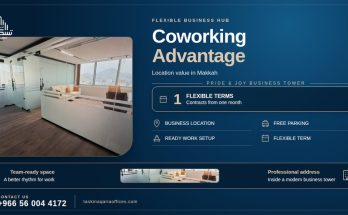
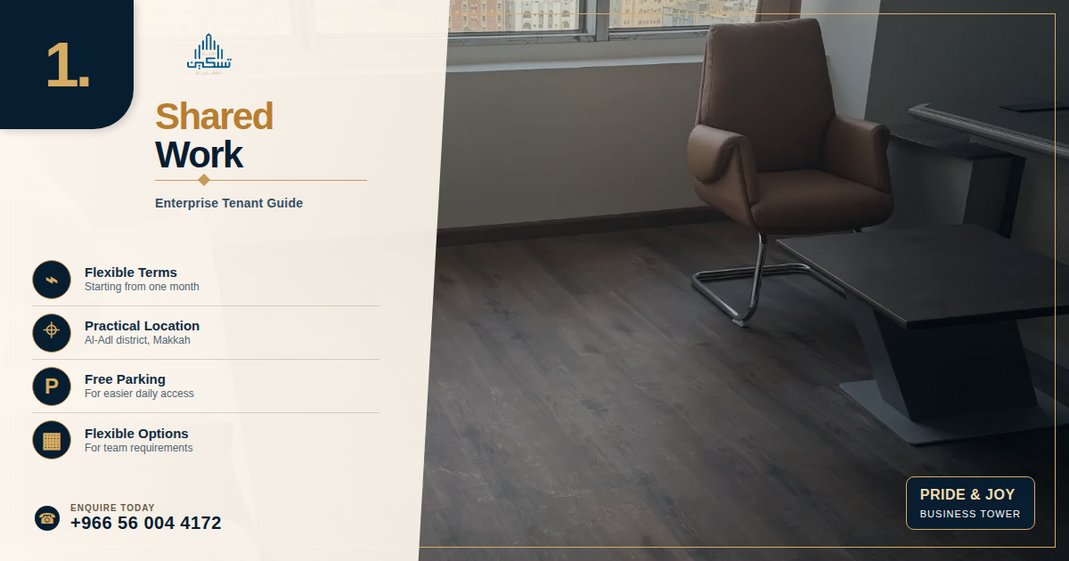
Pride & Joy Business Tower is located in the Al-Adl district near Jabal Al-Nour on King Faisal branch road. The tower offers office options in different sizes, free parking, and views toward the Clock Tower and Ghar Hira. These are practical features to discuss alongside a company’s own travel patterns, visitor profile, and working hours.
Do not treat convenience as a secondary concern. A workspace that employees can reach consistently gives management a stronger basis for scheduling meetings and coordinating projects. Additionally, a location that feels clear and professional to visitors can support the company’s commercial relationships without making claims that the site cannot sustain.
Benefits of Coworking Spaces in Contract Flexibility
Contract structure is another part of the decision. Businesses should ask what is included, what needs prior arrangement, and how the agreed use can be reviewed as the team evolves. A flexible agreement can support a staged rollout, particularly when leaders want to validate a workplace routine before committing to a broader arrangement. At the tower, flexible lease contracts can start from one month, which allows a measured initial period.
Use the first period to set internal responsibilities. Choose a workplace contact, share arrival guidance with team members, and record the process for guests. Then review the experience against the original business case. This makes the arrangement easier to manage and gives the company evidence for its next decision.
Discuss Cost With the Right Questions
Businesses comparing coworking membership prices Makkah should avoid treating a headline figure as the whole comparison. Ask which services are included, which facilities need booking, and what arrangements are required for the team’s particular working pattern. This produces a more honest view of operating value than an isolated price reference.
It is equally important to account for management time. A prepared work environment may reduce the internal coordination needed for furniture, maintenance, shared facilities, and visitor handling. The finance and operations teams should review the choice together. As a result, the company can evaluate the space as part of an operating model rather than as a simple rental line.
Step Four: Prepare a Controlled Launch
Once the location is selected, create a short launch plan. Give every user the address, access expectations, visitor process, and internal point of contact. Schedule the first meetings with enough time to understand the arrival experience. Then ask the initial users for focused feedback about access, concentration, service response, and suitability for client interactions.
This review does not need to be complicated. It should answer whether the space serves the stated purpose and whether the team knows how to use it well. Moreover, it lets management address a small process issue before it becomes a recurring inconvenience. A workplace is most useful when its operating rules are as clear as its physical layout.
A Practical Makkah Option for Business Teams
When reviewing a location, companies should ask whether it supports their immediate requirements while giving them room to adapt. Taskin Aqaria specialises in developing, managing, and operating real estate projects, including the leasing of administrative, commercial, and industrial units. That perspective allows the discussion to begin with the organisation’s operating needs rather than a generic workspace package.
For businesses that need a Makkah base, Pride & Joy Business Tower provides a setting to assess through a real visit and a clear requirement list. It is also useful to place the decision within the wider context of sustainable business development and the priorities described by Saudi Vision 2030. The aim is a considered workspace choice that fits the company’s own plans and operating standards.
Final Checklist for a New Enterprise Tenant
Start with the work purpose. Test the daily journey. Separate collaborative tasks from private work. Review contract terms and included services. Finally, set a simple launch plan and collect feedback. These steps help an enterprise tenant translate the advantages of flexible work into a controlled, practical decision.
For more location and workplace guidance, visit the Taskin Aqaria Blog. A careful process will help the company select a setting that works for its people, visitors, and projects today while remaining capable of adjustment tomorrow.
Reserve your seat now in the coworking spaces at Pride & Joy Business Tower in Makkah — contact Taskin Aqaria through the official website.