Coworking vs Private Office: Practical Tips and Common Mistakes to Avoid
Investors and property owners in Makkah face a recurring strategic challenge when determining the optimal leasing model for their commercial assets. Navigating between flexible coworking environments and traditional private offices requires careful market analysis and a clear understanding of common pitfalls that can erode investment returns.
Coworking vs Private Office: Where Does the Decision Begin?
Every real estate investor eventually confronts the central question of coworking vs private office and which model delivers superior returns. Therefore, the answer must begin with a thorough understanding of the local market and its evolving dynamics. Moreover, the business landscape in Makkah is undergoing significant transformation, driven by the ambitious goals of Saudi Vision 2030, which actively encourages entrepreneurship and innovative work environments. As a result, demand for flexible workspace solutions is growing steadily across the Kingdom.
On the other hand, traditional private offices remain the preferred choice for established corporations seeking complete privacy and a distinct institutional identity. In fact, the right answer rarely favors one model absolutely over the other. Instead, it depends on identifying the target tenant profile and designing the real estate product to match their actual operational needs.
Practical Tips for Evaluating Investment Returns
First, investors must analyze the operational costs of each model with precision before committing capital. Managing a coworking space Makkah requires a higher initial investment in technical infrastructure, including high-speed internet, meeting rooms, and shared amenities. Additionally, this model demands continuous operational effort to maintain service quality and tenant satisfaction. However, the overall yields can be significantly higher because the same physical space can serve multiple users at different times.
Second, property owners should carefully study coworking membership prices Makkah and benchmark them against traditional leasing rates in the same area. Successful investment depends on setting competitive pricing that attracts startups and independent professionals while maintaining healthy profit margins. Then, evaluating the flexibility of lease contracts becomes a critical differentiator in attracting clients who need scalable workspace solutions.
Analyzing Operational Risks
Investors must pay close attention to occupancy rate fluctuations that are inherent in flexible models. Especially during periods of economic transition, shared workspaces may be affected more quickly than long-term lease contracts. Therefore, diversifying the leasing portfolio to include a mix of short-term and long-term agreements is strongly recommended to reduce risk and achieve greater financial stability.
Furthermore, investors should account for the ongoing maintenance costs of shared facilities. Additionally, managing a coworking community requires specialized human resources in customer service and facilities management. As a result, careful operational cost planning is a fundamental pillar for ensuring the long-term sustainability of the investment.
Common Mistakes Property Owners Make When Choosing
One of the most prominent mistakes is underestimating the importance of a strategic location when establishing a shared business center. Offering a shared office space Mecca requires a vibrant, easily accessible location supported by comprehensive ancillary services. Moreover, some property owners make the mistake of underinvesting in technical infrastructure quality, which is the lifeblood of modern businesses operating in competitive markets.
Another frequent error is failing to provide diverse workspace options that cater to different market segments. For instance, designing a coworking space for freelancers should differ fundamentally from areas dedicated to medium-sized enterprises or remote corporate teams. In fact, understanding the specific operational needs of the end-user is the cornerstone of any successful real estate investment project.
Pricing and Contracting Mistakes
Property owners frequently fall into the trap of poorly calibrated pricing strategies. Pricing too high drives away potential clients, while pricing too low undermines investment returns. Therefore, a pricing strategy requires careful market analysis and the identification of a precise equilibrium point. Additionally, lease terms must be clear and transparent to build trust with tenants and ensure the continuity of the business relationship.
On the other hand, some investors overlook the importance of post-leasing support services. Providing ongoing operational support to tenants significantly increases retention rates and reduces the cost of finding new clients. Moreover, building an active professional community within the workspace adds measurable value and differentiates the offering from competitors in the market.
The Advantages of Each Model According to Market Needs
The coworking model offers exceptional flexibility that suits startups, independent professionals, and small teams. First, this model allows tenants to experience a professional work environment without long-term financial commitments. Then, tenants benefit from ready-made infrastructure and shared amenities without bearing the cost of setting them up independently. Additionally, tenants can scale their workspace up or down as their team grows or their needs change.
In contrast, a private office provides an independent institutional identity that strengthens client and partner confidence. Furthermore, it gives the company complete control over its work environment, allowing customization according to its corporate culture and branding. Especially for companies handling confidential information or regularly receiving clients, a private office is the most appropriate choice for maintaining professionalism and discretion.
Key Decision Criteria for the Successful Real Estate Investor
A successful investor needs a clear methodology when comparing the two models. First, it is essential to precisely identify the target tenant segment, whether startups, independent professionals, or medium-sized companies. Additionally, studying the competition in the target geographic area helps identify market gaps that can be profitably addressed. Moreover, the investor must assess their own operational capacity and the availability of qualified staff to manage the chosen model efficiently.
On the other hand, geographic location plays a pivotal role in the success of any office project. Proximity to commercial centers and government offices significantly increases demand for workspace. Therefore, selecting the right location represents half the success of any office investment project. Then, the quality of equipment and services provided completes the picture and achieves market differentiation.
The Role of Technology in Flexible Workspace Models
Modern technology is transforming traditional office spaces into smart, integrated work environments. Therefore, investors should invest in technological systems that support space management and track usage accurately. Especially in the coworking model, technology enables improved tenant experience and greater operational efficiency simultaneously. Additionally, digital booking systems and smart facility controls help reduce long-term operational costs and improve overall profitability.
Taskin Aqaria and Pride & Joy Business Tower: A Model of Excellence
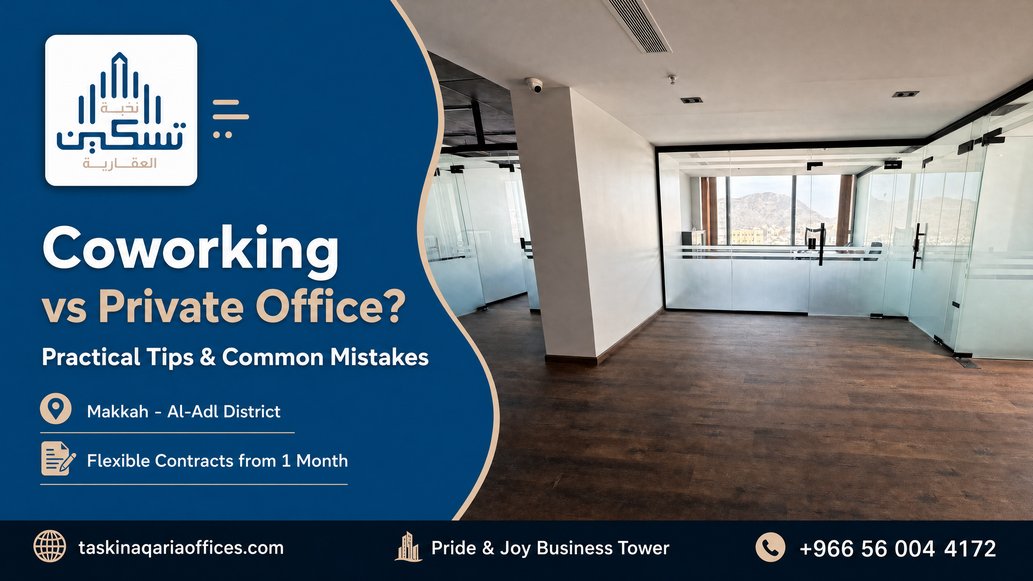
Taskin Aqaria is a pioneer in providing advanced office solutions that meet the aspirations of both investors and businesses across Saudi Arabia. Through its deep expertise in real estate asset management and development, the company introduces innovative operational models that combine flexibility with professionalism. The Pride & Joy Business Tower stands out as one of the most important administrative projects in Makkah, combining a strategic location in the Al-Adl district on King Faisal branch road with a modern, fully integrated design.
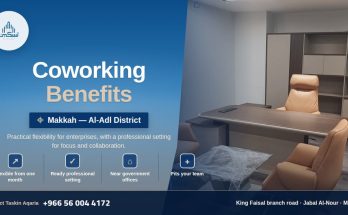
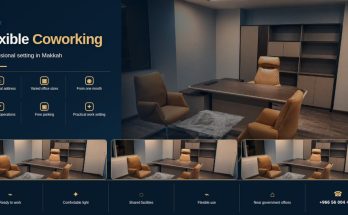
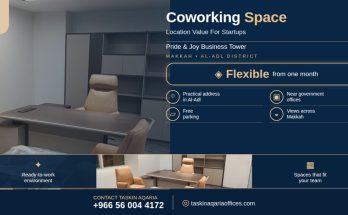
The Pride & Joy Business Tower offers diverse office spaces suitable for all needs, featuring flexible contracts starting from just one month. Additionally, the tower provides free parking and unique views of the Clock Tower and Ghar Hira, giving tenants a distinctive work environment unlike any other in the city. These advantages reflect the commitment of Taskin Aqaria to delivering a professional work environment that genuinely supports business growth and meets the expectations of investors in the heart of Makkah.
The tower is strategically located near government offices and major commercial centers, making it an ideal choice for companies that require easy access to official institutions. Moreover, the tower provides a secure, technology-equipped work environment designed to maximize productivity and operational efficiency for all tenants.
Conclusion: Making the Right Investment Decision in Makkah 2026
Ultimately, the choice between the two models depends on the investor’s strategy and their readiness for specialized operational management. Flexible leasing offers promising opportunities for higher returns in a market experiencing accelerated growth, while traditional leasing provides greater long-term financial stability. For more insights and analysis on the real estate market, visit the Taskin Aqaria Blog to explore the latest trends and research in this dynamic sector.
Reserve your seat now in the coworking spaces at Pride & Joy Business Tower in Makkah — contact Taskin Aqaria through the official website.