Coworking Space For Freelancers: Questions To Ask
A shared office can support independence without isolating your work. This guide answers common questions and tests the assumptions behind coworking decisions.
What Does A Coworking Space For Freelancers Really Offer?
A coworking space for freelancers offers more than a desk. It can provide a professional setting, a credible address, and a practical way to work without taking on a full private lease.
Freelancers often balance client meetings, focused production, and changing workloads. Therefore, the right workspace should support those activities without adding avoidable operational tasks.
A shared workspace for entrepreneurs Makkah can also help founders host clients in a setting that feels clear and professional. The right choice depends on actual work patterns and contract terms.
Some people still picture coworking as a crowded room with constant conversation. However, modern workspaces can include prepared offices, quieter areas, meeting options, and clear rules for shared use.
The value depends on the work itself. A consultant may need a polished meeting setting, while a designer may prioritise focus, daylight, and reliable access. A remote team may need a place to meet occasionally.
Is Coworking Only For New Businesses?
Not necessarily. Independent professionals, small agencies, consultants, and early-stage teams can all use a shared workplace. Established companies may also need a flexible satellite base in Makkah.
In fact, the model is useful whenever the office requirement changes faster than a traditional lease can accommodate. A freelancer can test a professional routine before making a longer commitment.
Still, coworking is not automatically the right answer. A business with strict confidentiality needs, frequent private meetings, or specialised equipment should review its requirements carefully.
The best decision starts with a simple question: what must the workspace make easier? The answer should guide the tour, the questions, and the contract review.
Coworking Space For Freelancers: Which Benefits Matter?
Ready-to-use offices reduce setup friction. Instead of spending time arranging furniture and basic workplace needs, a freelancer can focus on clients, delivery, and business development.
Flexibility matters just as much. Contracts that start from one month allow an entrepreneur to test the fit before making a longer decision. Additionally, flexible terms can support a team that grows in stages.
Flexibility should not mean uncertainty. The operator should explain what the agreement includes, how access works, how visitors are handled, and which services require separate arrangements.
The benefits of coworking spaces can include faster setup, a professional environment, and natural opportunities to meet other business owners. Yet those benefits depend on the quality of the setting.
A good space protects concentration while leaving room for useful contact. Moreover, free parking can improve the experience for clients and partners who visit the office.
Does A Shared Community Guarantee Networking?
No. Networking does not happen simply because people share a building. It develops through respectful interaction, relevant conversations, and a workplace culture that allows people to connect without pressure.
A short conversation may lead to a useful insight or a referral. However, a professional should not choose a workspace based on promises of guaranteed leads. A community can create possibilities, not replace business planning.
Freelancers still need a clear service, consistent outreach, and dependable delivery. Coworking can support those efforts, but it cannot perform them on the freelancer’s behalf.
This distinction corrects a common misconception. A shared workspace is a business tool, not an automatic sales channel.
How Should You Compare Coworking And A Private Office?
Start with your working pattern. If you need a ready office and operate alone or with a small team, a flexible workspace may fit well. If you hold sensitive meetings every day, you may need more control.
Write down your non-negotiables before visiting any property. Include privacy, access hours, visitor handling, storage, meeting needs, commute time, and the number of people using the space.
A careful review of coworking vs private office separates essential requirements from personal preferences. Do not judge only the furniture. Review the building operation, contract terms, access, and location.
A private office can offer stronger control over layout, branding, and scheduling. However, it can also create more responsibility for setup, services, maintenance, and future adjustments.
Shared workspace can reduce that operational load. Therefore, it may suit an independent professional who wants a credible setting, or a team that is still testing its long-term footprint.
When Does Privacy Become A Priority?
Privacy becomes more important when a business handles client records, commercial negotiations, or confidential advice. Ask whether the operator can provide a private office or a suitable meeting area.
Physical separation is only part of the answer. The team should also consider document storage, device security, conversation control, and internal policies. These responsibilities remain shared between the tenant and the operator.
On the other hand, some freelancers request more privacy than their work requires. Review the number of private meetings and the sensitivity of client work before choosing a more restrictive option.
The goal is proportionate privacy. It should protect the work without creating an unnecessary cost or reducing the flexibility that attracted you to coworking.
Coworking Space For Freelancers: Questions To Ask On A Tour
Treat a site visit as a practical test. Ask about access, communication with management, meeting rooms, visitor procedures, maintenance requests, and the response to everyday problems.
Look beyond the first impression. Notice noise, lighting, circulation, furniture condition, lift access, and the ease of finding the office. Then imagine a normal workday rather than a short viewing.
Location also deserves careful attention. Proximity to government offices and business districts can reduce travel time for appointments in Makkah. A clear route and free parking can make client visits easier.
Ask for a complete explanation of coworking membership prices Makkah. Confirm what the contract covers, whether services are separate, and which terms can change. Avoid relying on an assumed figure.
Total value matters more than a headline price. Compare readiness, flexibility, professional presentation, travel time, and management clarity. The cheapest option may not support the workday effectively.
Which Contract Details Deserve Attention?
Read the access and renewal clauses first. Then review termination, maintenance responsibility, permitted use, visitor rules, and any conditions for changing the selected space.
Contracts that start from one month can reduce commitment risk. Even so, the terms must be clear. Flexibility is useful only when the tenant understands how it operates in practice.
Ask how invoices, support requests, and office changes are handled. A transparent process prevents small operational questions from becoming a repeated distraction.
Finally, confirm the correspondence address and visitor experience. A professional address should be easy to explain and simple for clients to reach.
Taskin Aqaria And Pride & Joy Business Tower
Taskin Aqaria develops, manages, and operates real estate projects in Saudi Arabia. Its services include property, facility, and asset management, along with leasing for administrative, commercial, and industrial units.
Pride & Joy Business Tower offers an administrative setting in Makkah’s Al-Adl district, near Jabal Al-Nour and King Faisal branch road.
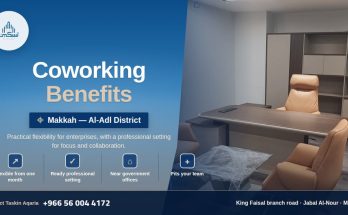
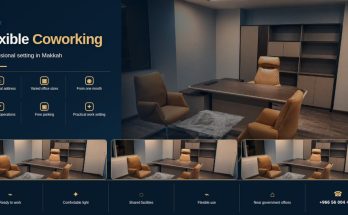
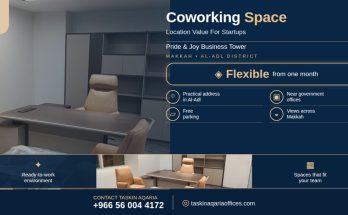
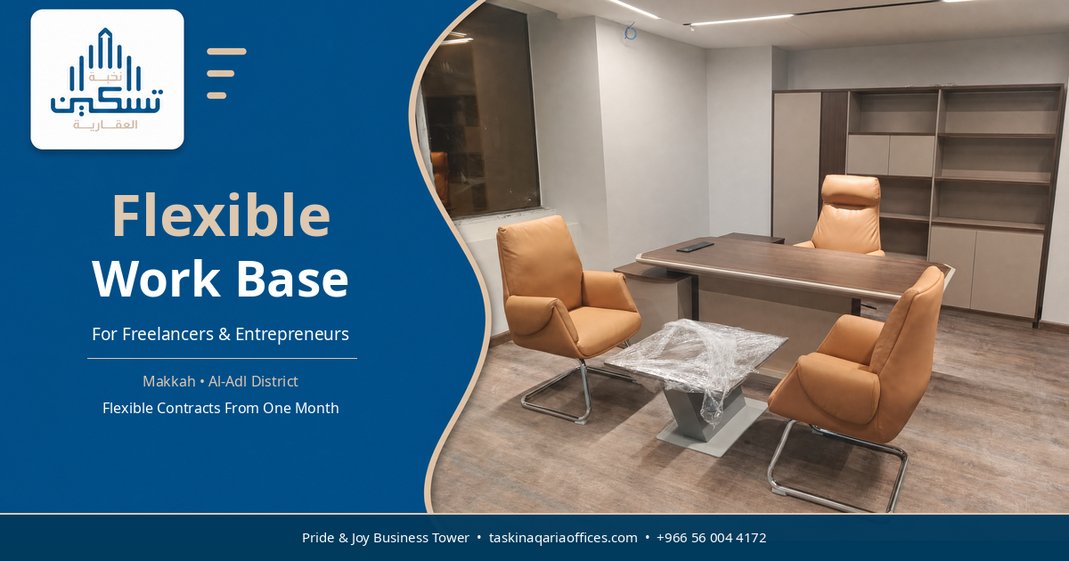
The tower provides offices in varied sizes and flexible contracts starting from one month. It also offers free parking, with views toward the Clock Tower and Ghar Hira from the location.
These details can matter to freelancers who need a professional base near government offices. They do not replace due diligence, but they create a useful starting point for comparing workspace requirements.
Through its official channels, Taskin Aqaria can clarify the practical details that influence the decision. Asking direct questions is more reliable than depending on a quick impression or a general claim.
A visit to Pride & Joy Business Tower can help an entrepreneur judge the setting against actual work habits. The final choice should follow the team’s needs and the contract presented by the operator.
A Clearer Way To Choose Your Workspace
Freelancers do not need a workspace simply because it looks modern. They need a setting that supports focused work, client confidence, and responsible growth.
First, define the workday. Then test privacy, readiness, location, access, and contract clarity. As a result, the decision becomes a comparison of real requirements rather than an emotional reaction to design.
For more practical guidance, visit the Taskin Aqaria Blog and explore related advice on offices, leasing, and workplace decisions.
Flexible business environments also connect with the wider growth priorities of Saudi Arabia. For national context, consult Saudi Vision 2030 and consider how your workspace supports the next stage of your activity.
Reserve your seat now in the coworking spaces at Pride & Joy Business Tower in Makkah — contact Taskin Aqaria through the official website.