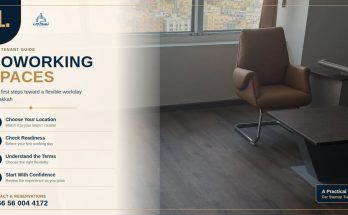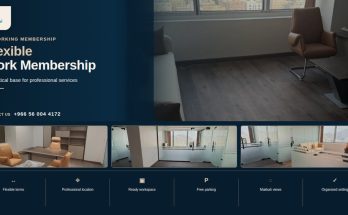
Coworking Vs Private Office? A Tenant’s Decision Guide
A new tenant needs more than an attractive room. This step-by-step guide helps investors and property owners compare flexibility, privacy, access, and operating fit in Makkah.
Coworking Vs Private Office: Start With The Work Pattern
The right choice begins with the way people work. Do you need a quiet room for a stable team? Or do you need a ready seat that can adapt as projects change? Those questions matter more than furniture or a polished reception area.
A coworking setting can suit a freelancer, an early-stage team, or a company testing a new market. A private office can offer stronger control over conversations, visitors, and sensitive documents. Neither option is automatically better.
When researching coworking vs private office, compare the operating model rather than the photos. Review booking rules, expansion options, privacy, client reception, and the time required to become operational.
Step One: Define The Tenant Profile Before Visiting
Write a short description of a normal workday. Include the number of regular users, the type of meetings, the equipment you bring, and the expected lease horizon. Then list the conditions that cannot be compromised.
A freelancer may prioritise a credible address, a comfortable desk, and access to meeting facilities. A small team may need collaboration zones and a quiet place for focused work. A property owner or investor may assess whether a shared model can serve several tenant profiles without creating operational confusion.
If your team changes often, ask how seats and meeting rooms are allocated. If your team is stable, compare the privacy benefit of a dedicated room with the flexibility you may not use. As a result, the decision stays connected to the business plan.
Test Privacy, Reception, And Community
Privacy has several layers. Visual privacy, sound privacy, document security, and visitor control all deserve separate questions. Ask where calls happen, how guests are received, and whether confidential conversations have an appropriate setting.
Community is a different benefit. A shared environment can create natural contact with other professionals. That contact may support useful introductions, but it does not replace clear house rules. Therefore, ask about quiet periods, call zones, shared tables, and expectations around professional conduct.
Step Two: Read The Contract As An Operating Document
Do not rely on a broad promise of flexibility. Ask the provider to explain the commitment period, included services, renewal process, and path to a larger space. Contracts starting from one month can be useful when a business is testing demand or managing a temporary project.
There is no single number that fits every company. When reviewing coworking membership prices Makkah, request a proposal that matches the users, seat type, private-room needs, and meeting requirements.
Compare total operating value, not rent alone. A ready-to-use space may reduce setup time and furniture decisions. However, additional services can have separate terms. Make sure those terms are clear before you commit.
For property owners, transparent terms reduce misunderstandings and make the tenant journey easier to manage. For investors, they also reveal whether the operating model is structured enough to scale. Clarity is part of the real estate product.
Step Three: Assess Access Before Counting The Minutes
Location affects the daily experience before it affects the brand image. Check the approach roads, entry points, parking, visitor movement, and proximity to clients or government offices. Then visit at a realistic working time instead of relying only on a map.
A well-positioned shared office space Mecca can combine a professional address with practical access. Still, the city name is not enough. Understand the district, the road, the entrance, and the route your visitors will actually take.
Some searches use the phrase coworking space Makkah for the same need. Review those options by access and operating fit, not by the label alone.
Makkah has different movement patterns during different periods. A business that works with government entities may value one kind of access. A consulting team with frequent client meetings may value another. Map the journeys that repeat each week, then ask whether the location removes friction.
Step Four: Inspect The Space Like Your Team Will Use It
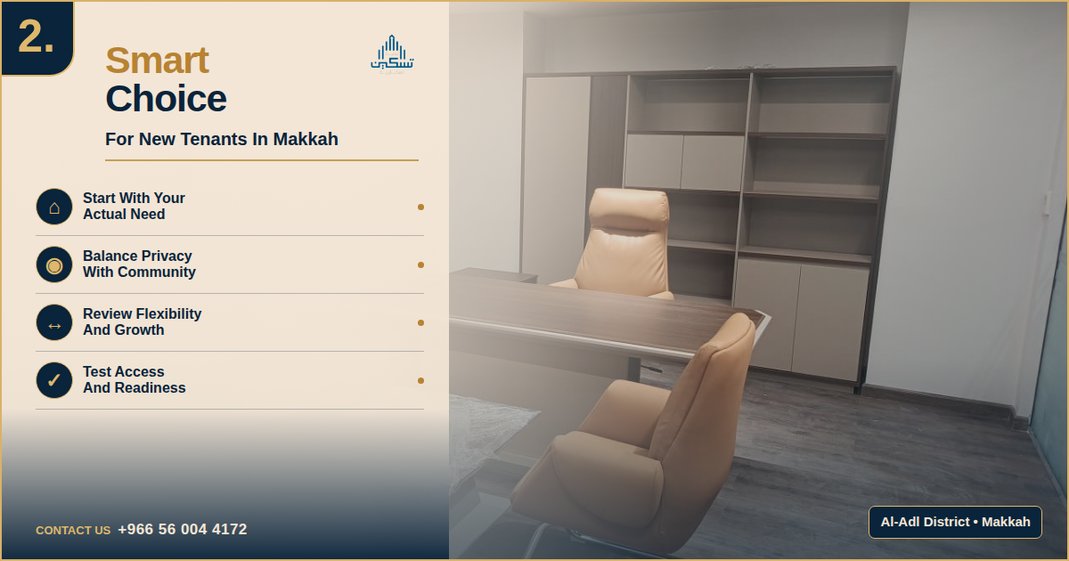
Take more than a quick tour. Sit at the desk, listen to the room, check the lighting, and walk through the circulation path. For a private office, review the desk layout, visitor seating, storage, and meeting flow.
For coworking, study the balance between open areas and quieter zones. Some work requires rapid collaboration. Other work requires uninterrupted concentration. Ask about seat availability during working hours, meeting-room access, and the possibility of keeping a team together.
Small details influence a client’s impression. Clean surfaces, readable signs, considered lighting, and a simple visitor journey all matter. They also matter to property owners because they show how the asset is managed.
Who Benefits From Each Format?
Coworking is often a practical starting point for a business that wants readiness and adjustable commitment. It can serve freelancers, remote teams, project groups, and companies entering a new area. That is why many founders explore coworking space for freelancers when they need a credible work setting without building a full office immediately.
A private office can be more suitable for a stable team that needs control over access, sound, and files. It can also support a company that receives clients frequently. Even then, a private tenant may benefit from shared meeting facilities or a flexible area for occasional team expansion.
From an investment perspective, both formats can belong in one managed portfolio. A mix of sizes and uses may serve more than one market segment. Yet the model needs consistent maintenance, clear contracts, and dependable communication with occupants.
How Pride & Joy Business Tower Fits The Decision
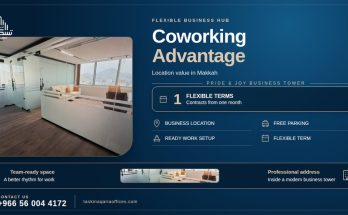
Pride & Joy Business Tower is in Al-Adl district in Makkah, near Jabal Al-Nour and King Faisal branch road. The setting helps a new tenant balance access, a professional address, and proximity to government offices.
Taskin Aqaria develops, manages, and operates real estate projects for business needs. At the tower, tenants can review offices in varied sizes, flexible contracts starting from one month, free parking, and views toward the Clock Tower and Ghar Hira. The right choice still depends on the tenant’s actual requirements, so availability and fit should be confirmed directly.
During a visit, ask for the complete journey from registration to daily use. Learn where a visitor arrives, how a meeting room is booked, what the contract includes, and how a growing team can change its space. These questions give property owners and investors a clearer view of operations, while giving new tenants a more organised start.
Taskin Aqaria publishes official information to help businesses compare options responsibly. For further property and business topics, visit the Taskin Aqaria Blog. The wider business context can also be considered alongside Saudi Vision 2030 and its focus on diversification and private-sector growth.
A Five-Minute Decision Check For Investors And Owners
Before agreeing, write a short answer to five questions. Does the space fit the current work pattern? Does the contract allow a sensible change? Can staff and clients reach it without unnecessary friction? Is privacy suitable for the information handled? Are included and additional services clearly stated?
If the answers are balanced, take one final visit during a realistic working period. Speak with the operating team, review the written terms, and record the observations. Then compare alternatives using the same questions. This prevents the most attractive first impression from making the decision for you.
Property owners can use the same check when shaping an offer. Make the journey easy to understand, describe the available formats accurately, and review the tenant experience from enquiry to renewal. Therefore, the product remains useful beyond the initial marketing message.
The Practical Conclusion: Choose Fit Over Fashion
There is no universal winner in the coworking versus private-office decision. Coworking leads when flexibility, readiness, and professional interaction are central. A private office leads when privacy, control, and a consistent client experience carry more weight.
Make the comparison practical. Define the profile, read the contract, test access, inspect the room, and request clear information. In Makkah, a professional location can support a structured start, but the final choice should remain grounded in real needs and transparent terms.
When you visit Pride & Joy Business Tower, ask for a comparison that reflects your actual work pattern before choosing.
Reserve your seat now in the coworking spaces at Pride & Joy Business Tower in Makkah — contact Taskin Aqaria through the official website.